Why Choosing the Right Industrial Sewing Machine Matters for Factories in Pakistan
Imagine this: your factory is running full capacity in Lahore, Faisalabad, or Sialkot. Orders are piling up, operators are rushing, and deadlines are tight. Suddenly, you notice:
- Seams on shirts are inconsistent
- T-shirt edges fraying after just one wash
- Hemlines on active wear look untidy
- Rework is piling up, slowing production and increasing costs
The culprit? Using the wrong industrial sewing machines — or not knowing which one is right for each task.
In Pakistan’s export-oriented garment and textile industry, choosing the right machine — lockstitch, overlock, or coverstitch — is more than a technical decision. It’s a business-critical investment that affects:
- Seam quality and fabric durability
- Production speed and workflow efficiency
- Compliance with export standards
Why Factories Struggle
Many owners and production managers make common mistakes:
- Buying a single machine for all tasks
- Following supplier recommendations without considering workflow
- Ignoring after-sales support and service
- Focusing on price rather than the right solution
The result is stitch errors, fabric damage, delayed shipments, and higher operational costs — all things that export buyers notice immediately.
The Right Machine for the Job
Each machine has a clear role in modern factories:
- Lockstitch → precise construction seams for woven and denim garments
- Overlock → edge finishing and seam reinforcement
- Coverstitch → stretchable hems and professional knitwear finishing
Using the correct combination ensures smooth workflow, consistent quality, and export-ready products.
What You Will Learn in This Guide
By reading this guide, you’ll clearly understand:
- What each machine does
- Where it should be used
- Which machine (or combination) fits your factory
- How to choose equipment that supports export-quality production
For a broader perspective, see our guide on Best Industrial Sewing Machines in Pakistan, which explains factory-wide machine selection for maximum efficiency and quality.
Understanding the Main Types of Industrial Sewing Machines
When searching for the types of industrial sewing machines, factory owners are usually trying to identify which machine fits their production needs. Industrial sewing machines are task-specific, designed to perform one operation efficiently and consistently in high-volume factory environments.
Why Different Machine Types Exist
- Each production stage needs a specific stitch type
- One machine cannot handle all operations
- Specialized machines improve quality and speed
- Export standards require consistent stitching
Main Industrial Sewing Machine Types & Uses
✅ 1. Lockstitch Machine
Best for: Main construction seams
- Produces clean, straight, strong stitches
- Ideal for woven garments, shirts, trousers & denim
- High precision and stitch durability
- Backbone of garment construction
Used in:
Garment factories, denim units, export apparel production
✅ 2. Overlock Machine
Best for: Edge finishing & seam reinforcement
- Trims and stitches fabric edges simultaneously
- Prevents fabric fraying
- High-speed operation for mass production
- Essential for knitwear and sportswear
Used in:
T-shirt factories, knit garments, sportswear manufacturing
✅ 3. Coverstitch Machine
Best for: Hemming & stretchable finishes
- Creates flexible stitches that stretch without breaking
- Delivers professional hems on knit fabrics
- Essential for export-quality finishing
Used in:
T-shirts, activewear, sportswear, knit garments
Why Modern Factories Use All Three
- Each machine handles a specific production task
- Combined use ensures smooth workflow
- Reduces rework and downtime
- Improves export-quality consistency
Pro Tip (Infographic Idea):
Production Flow:
Lockstitch → Overlock → Coverstitch
Pro Tip
No single machine can replace the function of another. A balanced combination of lockstitch, overlock, and coverstitch machines is essential for efficient, export-grade factory production.
What Is a Lockstitch Machine and Where Is It Used?
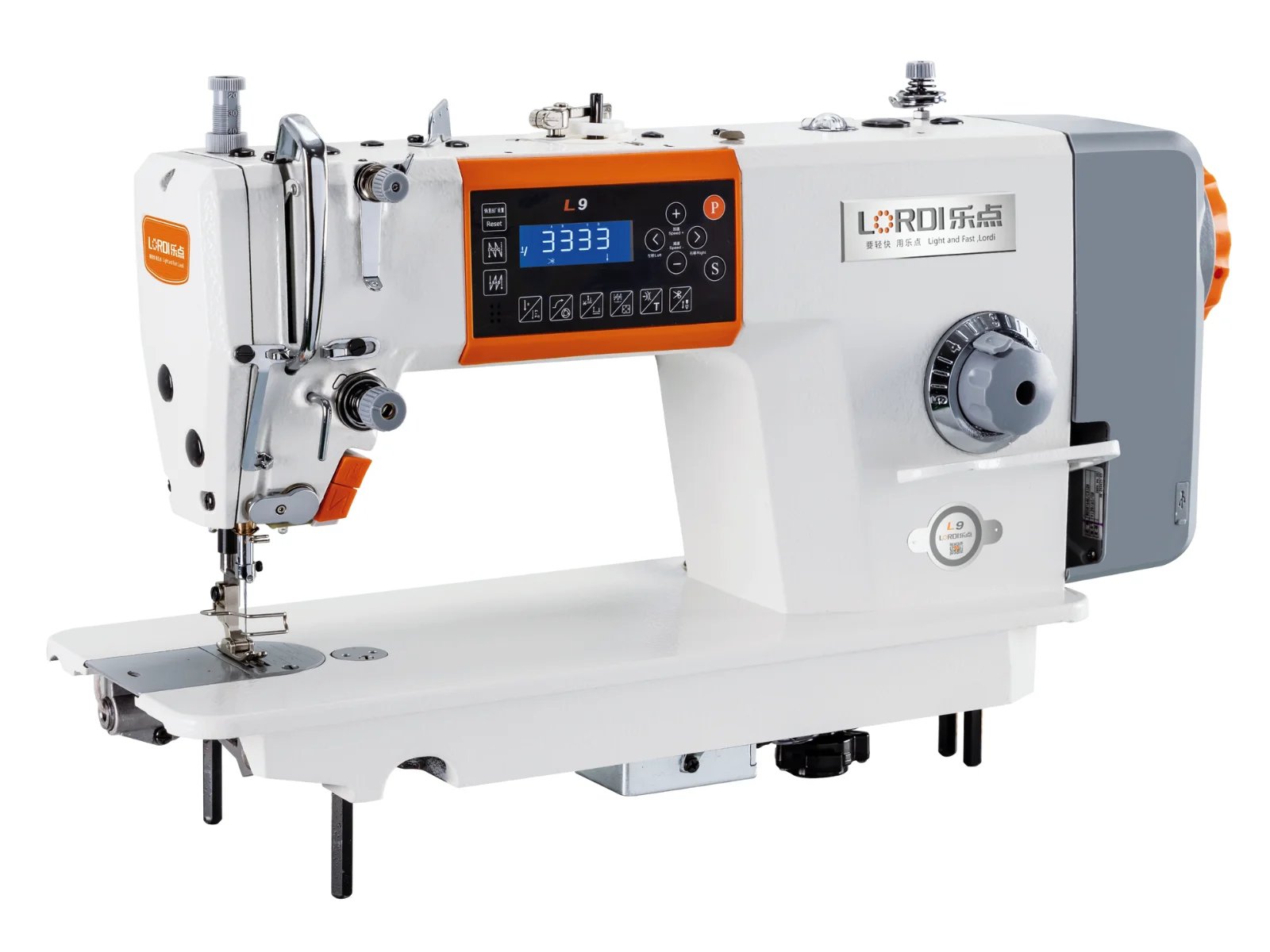
The lockstitch machine is the backbone of almost every industrial garment production line. It produces a strong, straight stitch that is widely used in construction seams for woven and denim fabrics. For factories in Lahore, Faisalabad, and Sialkot, it is often the first machine installed in production lines because of its versatility and precision.
How a Lockstitch Machine Works
- Uses upper thread and bobbin thread to form a locked stitch
- Creates tight, straight stitches that don’t unravel easily
- Simple mechanical or computerized operation for consistency
- Runs at high speed for mass production without compromising quality
Pro Tip for Infographic: Show a small diagram of upper thread + bobbin thread forming a stitch
Best Applications of Lockstitch Machines
Ideal for:
- Shirts – precise panel construction and durable seams
- Trousers – high-strength main seams for comfort and durability
- Denim – heavy-duty stitching without thread breakage
- Woven garments – clean and consistent finishes for export-quality products
Advantages of Lockstitch Machines for Factories
- Strong stitches – ideal for durable garments
- Clean finish – professional look suitable for export
- High precision – accurate seams even for complex patterns
- High efficiency – reduces errors and rework in high-volume production
Limitations You Should Know
- Not suitable for raw edges – requires overlock for finishing
- Needs support machines – cannot perform hemming or overlocking alone
- Best used as part of a combined setup with overlock and coverstitch machines
Pro Tip
Lockstitch machines are essential for main construction seams, providing strength, precision, and quality. While they are extremely versatile, pairing them with overlock and coverstitch machines ensures export-standard production and efficient workflow.
What Is an Overlock Machine and Why Garment Factories Need It
An overlock machine, also known as a serger, is designed to finish raw fabric edges while stitching. It trims, sews, and prevents fraying in one step, making it a critical machine for factories producing knit garments, t-shirts, and sportswear. For export-oriented factories in Lahore, Faisalabad, and Sialkot, overlock machines ensure professional-quality inside seams while speeding up production.
How an Overlock Machine Works
- Uses multiple threads (typically 3–5) to form a strong, looped edge stitch
- Trims fabric edge as it sews, creating a clean, finished seam
- Can operate at high speed for large-volume production
- Suitable for stretch fabrics as stitches have elasticity
Pro Tip for Infographic: Show thread loops around fabric edge and trimming action
Best Uses of Overlock Machines
Ideal for:
- Knit garments – prevents fraying and allows stretch
- T-shirts – fast, clean seam finishing
- Sportswear – professional inside finish with durability
- Edge finishing – essential for seams that need to withstand washing and stretching
Explore our industrial overlock machines.
Advantages for Mass Production
- Speed – completes edge finishing in seconds
- Edge trimming + stitching – combines two operations in one
- Clean inside finish – ensures professional, export-quality look
- High efficiency – reduces rework and downtime
Common Misconceptions About Overlock Machines
- Misconception 1: Can replace lockstitch machines → ❌ Not true, overlock is only for edge finishing
- Misconception 2: Works for all fabrics → ❌ Needs proper tension adjustment for heavy fabrics
- Misconception 3: Only for small-scale work → ❌ Industrial overlock machines are built for high-volume production
Pro Tip
Overlock machines are indispensable for edge finishing, trimming, and knitwear production. When combined with lockstitch and coverstitch machines, they form the core of a professional, export-standard factory workflow.
What Is a Coverstitch Machine and When Do You Need One?
A coverstitch machine is specialized for hemming and finishing stretchable fabrics. Unlike lockstitch or overlock machines, it creates parallel rows of stitches on the top side with a covering stitch underneath, allowing seams to stretch without breaking. This makes it essential for factories producing t-shirts, sportswear, activewear, and other knit garments, especially for export-quality standards.
How a Coverstitch Machine Works
- Forms double or triple parallel top stitches with a looper thread underneath
- Provides elastic seams that stretch with the fabric
- Ideal for hemming sleeves, waistbands, necklines, and t-shirt bottoms
- High-speed operation suitable for mass production
Pro Tip for Infographic: Show parallel top stitches + looper stitch underneath with fabric stretching
Where Coverstitch Is Used
Ideal applications:
- T-shirt hems – professional finish, stretchable
- Sportswear – durable seams for active use
- Activewear – flexible stitching without thread breakage
- Knit finishing – ensures fabric integrity and appearance
View our industrial coverstitch machines
Why Coverstitch Is Essential for Export Quality
- Ensures stretchable hems without compromising stitch strength
- Provides professional finishing, meeting international standards
- Complements lockstitch and overlock machines for complete production workflow
- Reduces rework and fabric waste, improving factory efficiency
Pro Tip
Coverstitch machines are critical for hemming and stretchable finishes. They complete the trio of machines (lockstitch, overlock, coverstitch) that every export-quality garment factory needs to run efficiently and consistently.
Lockstitch vs Overlock vs Coverstitch — Key Differences Explained
Choosing the right machine is essential for factory efficiency and export-quality garments. While lockstitch, overlock, and coverstitch machines each have unique functions, understanding their differences helps you set up a smooth production line and avoid costly mistakes.
Comparison Table: Lockstitch vs Overlock vs Coverstitch
| Feature | Lockstitch Machine | Overlock Machine | Coverstitch Machine |
| Stitch Type | Straight, single thread lock stitch | Looped edge stitch with multiple threads | Parallel top stitches with looper underneath |
| Fabric Suitability | Woven fabrics, denim, general garments | Knits, t-shirts, stretch fabrics | Knit fabrics, activewear, t-shirts |
| Speed | High, suitable for main seams | Very high, fast edge finishing | High, efficient hemming |
| Finish Quality | Strong, precise seams | Clean inside finish, prevents fraying | Elastic, professional hems |
| Production Role | Main construction seams | Edge finishing & seam reinforcement | Hemming & stretchable finishes |
| Factory Use Case | Shirts, trousers, denim, woven garments | T-shirts, sportswear, knitwear | T-shirts, sportswear, activewear, knit finishing |
Key Takeaways from the Comparison
- Lockstitch → backbone of garment construction; best for main seams
- Overlock → essential for edge finishing, prevents fraying, improves speed
- Coverstitch → critical for hemming & stretchable fabrics, especially export-quality knitwear
- Together, they form a complete, efficient production workflow
- Factories that integrate all three maximize quality, minimize rework, and meet export standards
Pro Tip for Infographic:
Create a visual flow showing:
Lockstitch → Overlock → Coverstitch
Include icons for stitch type, fabric, and function
Which Industrial Sewing Machine Is Best for Your Factory?
Choosing the right industrial sewing machine depends on your fabric type, production volume, and garment category. Below is a practical guide for factory owners in Pakistan to make the right decision and set up an efficient, export-ready production line.
1. Garment Factories (Woven Apparel)
Recommended Machines:
- Lockstitch → main seams, shirts, trousers
- Overlock → edge finishing, seam reinforcement
- Optional Coverstitch → for hemming woven items like casual wear
Why:
- Lockstitch ensures strong, precise seams
- Overlock prevents fraying and rework
- Coverstitch provides professional hems for export standards
2. Denim & Jeans Units
Recommended Machines:
- Heavy-duty Lockstitch → strong main seams for denim
- Overlock → seam finishing on edges
- Optional Coverstitch → hems on cuffs, waistbands
Why:
- Denim requires durable stitching for wash cycles
- Combined machine setup ensures high production speed and quality
3. Knit & Sportswear Factories
Recommended Machines:
- Overlock → high-speed edge finishing for stretch fabrics
- Coverstitch → hems, necklines, waistbands
- Optional Lockstitch → construction of main seams in heavier knits
Why:
- Knit fabrics need elastic stitches to maintain stretch
- Overlock + coverstitch combination ensures export-quality appearance
4. Leather & Heavy Material Units
Recommended Machines:
- Heavy-duty Lockstitch → main seams on thick material
- Overlock (specialized) → edge finishing if required
- Optional Coverstitch → decorative or hemming purposes
Why:
- Leather and thick fabrics need strong needles, high-torque motors, and precise stitch control
- Reduces fabric damage and production delays
How to Choose the Right Industrial Sewing Machine for Your Production Line
Selecting the right industrial sewing machine isn’t just about price or brand — it’s about matching the machine to your factory’s needs. Here’s a practical checklist to help factory owners make the right decision:
1. Fabric Type
- Determine the primary fabrics you will produce: woven, knit, denim, leather, canvas.
- Match the machine type to fabric requirements:
o Lockstitch → woven & denim
o Overlock → knits & edge finishing
o Coverstitch → hems & stretch fabrics
2. Production Volume
- Evaluate how many garments you produce per day or month.
- High-volume factories need industrial-grade machines capable of continuous operation without downtime.
- Ensure the machine speed and capacity align with production goals.
3. Skill Level of Operators
- Consider your workforce’s experience with industrial machines.
- Some machines (computerized or IoT-enabled) require trained operators, while others are more beginner-friendly.
- Balance machine sophistication with operator skill to avoid errors and rework.
4. Export Requirements
- For factories supplying international buyers, finish quality is non-negotiable.
- Machines must produce consistent, strong, and professional seams.
- Coverstitch for stretch garments, overlock for edges, lockstitch for construction → combined setup ensures export standards.
5. After-Sales Support
- Always confirm maintenance, spare parts, and on-site service availability.
- Factories in Lahore, Faisalabad, Sialkot benefit from suppliers like SUI Sewing Machines, offering factory-door support.
- Reliable support reduces downtime and protects your investment.
Pro Tip
- Choosing the right machine is a strategic decision, not just a purchase.
- Follow this checklist to ensure optimal production flow, quality, and efficiency.
- Combining lockstitch, overlock, and coverstitch machines with proper support is the key to export-ready factories.
Pro Tip for Infographic:
Create a checklist visual with icons for each factor — fabric, volume, skill, export, support — to make it easy for owners to scan.
Why Leading Factories Trust Sui Sewing Machinery Co.
For over 20 years, Sui Sewing Company has been a trusted partner for garment, denim, knitwear, and leather factories across Pakistan’s major export hubs — Lahore, Faisalabad, and Sialkot. Our commitment goes beyond selling machines — we provide complete solutions that improve efficiency, quality, and profitability.
20+ Years of Experience
- Decades of serving large export brands and local factories
- Deep understanding of production workflows, fabrics, and export requirements
- Expertise helps factories choose the right machines and avoid costly mistakes
Complete Solutions, Not Just Machines
- We don’t just sell lockstitch, overlock, or coverstitch machines
- We provide end-to-end production line solutions tailored to factory needs
- Includes workflow planning, machine setup, and optimization
Latest Imported Machines
- Access to state-of-the-art industrial sewing machines from global brands
- Includes heavy-duty, computerized, and specialized machines
- Ensures factories stay ahead in efficiency and quality standards
IoT & Computerized Options
- Machines with smart monitoring, precision control, and automation
- Reduces errors, increases output, and supports data-driven production planning
Factory-Door Support & After-Sales Service
- On-site maintenance, training, and repair services
- Minimizes downtime and protects your investment
- Our service teams are always ready to support factories in Lahore, Faisalabad, and Sialkot
✅ Key Takeaway
Factories choose Sui Sewing Machinery because we combine decades of experience, complete solutions, and cutting-edge technology with factory-door support. This ensures smooth production, export-quality garments, and long-term efficiency.
Need Help Choosing the Right Machine? Let Our Experts Guide You
Choosing the right industrial sewing machine is critical for your factory’s efficiency, quality, and profitability. With so many options — lockstitch, overlock, coverstitch, and advanced computerized machines — it can be overwhelming to decide what’s best for your production line.
At Sui Sewing Machinery, our team of experienced industry experts is here to guide you every step of the way.
How We Can Help
- Personalized Consultation – we assess your factory needs and recommend the ideal combination of machines
- Factory Assessment – onsite evaluation of your workflow, production volume, and fabric types
- Expert Guidance – from machine selection to setup, training, and after-sales support